
About KPRI
Exploring our history, principles, goals, and organizational structure
Brief History
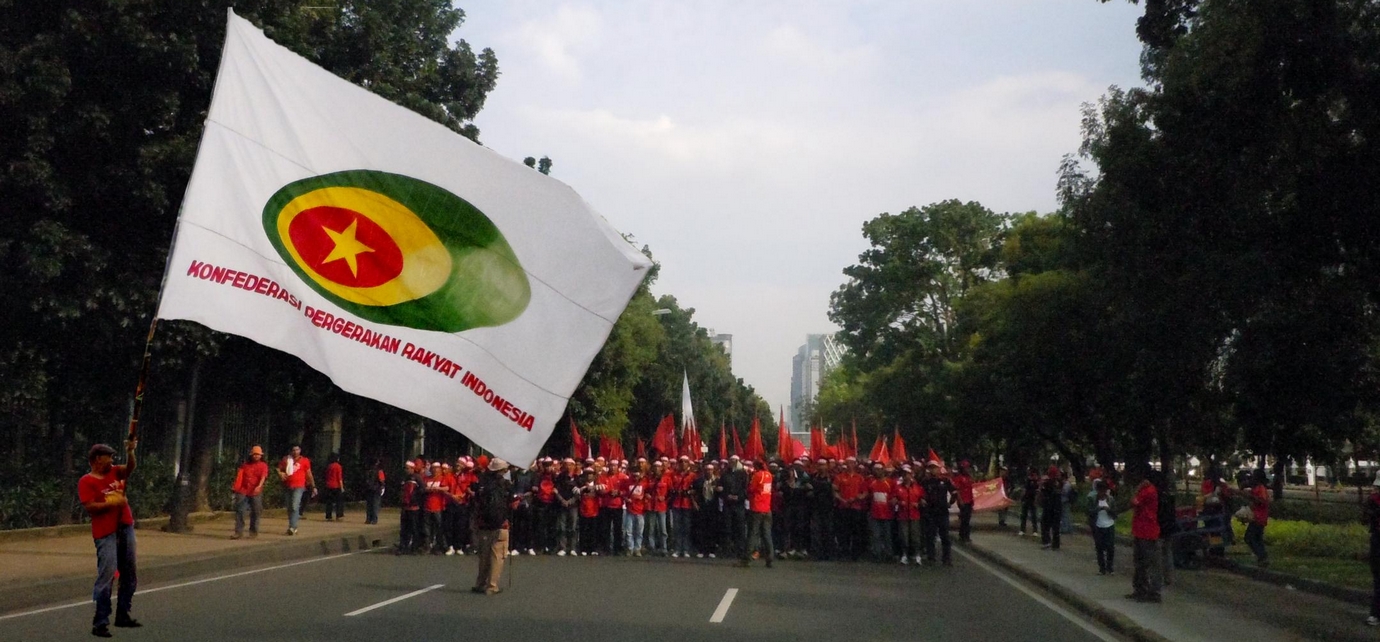
Konfederasi Pergerakan Rakyat Indonesia (KPRI; Confederation of Indonesia People Movement) is a confederation that brings together various federations and people's organizations across Indonesia, including farmer, labor, women's, fisherfolk, urban poor, youth, and indigenous community organizations. It is rooted in a joint initiative of people's movements and civil society organizations that, since the late 1990s, sought to build a more organized, democratic, and mass-based platform for people-centered advocacy.
The seeds of the organization were planted in 1999 through a series of research processes, political education, regional assessments, and movement consolidation across many regions. This process involved dozens of civil society organizations, activists, and people's organizations directly engaged in social advocacy work throughout Indonesia.
Formally, the organization was established in 2003 under the name PERGERAKAN, short for Perhimpunan Penggerak Advokasi Kerakyatan (People-Centered Advocacy Organization for Social Justice). Its founding was affirmed at the First Congress in 2005 in Bali.
In its early stage, PERGERAKAN had 14 people's organizations and 4 individual members. Membership later grew to 24 people's organizations and 6 individual members by the Second Congress. Under the organization's constitution, individual members are capped at a maximum of 20% of total membership, decided collectively by the member organizations.
At the Third Congress, PERGERAKAN transformed into a national confederation under the name Konfederasi Pergerakan Rakyat Indonesia (KPRI). This transformation also marked a change in organizational structure and membership system, with KPRI's members now consisting of national-level people's federations and coalitions of people's organizations sharing a common struggle to build social justice and people's sovereignty.
Organizational Principles
Thirteen values that form the foundation for every step KPRI takes in advancing social justice and the sovereignty of the Indonesian people.
People-Centeredness
A movement built on the strength of the people's mass base.
Solidarity
Togetherness and harmony among internal parties and with external stakeholders.
Progressiveness
Continuously pursuing better, sustained achievements in strengthening autonomous local communities.
Accessibility
Ease of access to services for everyone who needs them.
Participation
Services that are participatory, open, inclusive of all members, accountable, easy to reach, gender-sensitive, equal, and that encourage the independence of those served.
Decentralization
Institutional models and services must be spread across regions.
Independence
Holding an independent, firm stance so as not to be subject to intervention by any interest.
Constituent Mandate
Building decision-making mechanisms oriented toward the mandate given by constituents.
Rights-Based Perspective
Giving attention to human rights, gender, children's rights, environmental, and other perspectives in line with society's evolving sense of justice.
Self-Reliance
Prioritizing the use of internal resources to build the capacity of the social and political movement.
Openness
Being open to all parties who share the same vision, mission, and goals to take part in the organization.
Justice
Providing equal rights and recognition to all members.
Equality
Providing equal opportunity in organizational leadership for all members.
Organizational Goals and Functions
KPRI moves with a clear vision: building a new, just social order through leadership, education, and the organizing of the people's movement.
A New Social Order
Realizing a new, just, equal, and prosperous social order — a society in which critical individuals grow, capable of rational and scientific thought, self-disciplined, independent yet able to work collectively, holding healthy personal ambition alongside genuine social concern.
Freedom from Discrimination
Every person is free from discrimination and able to play an active role in decisions concerning shared interests, and to enjoy the results of their own work.
Dignified Freedom
The freedom every person holds to mobilize their potential and elevate their human dignity is not aimed solely at individual satisfaction, but also at advancing shared prosperity and welfare — progress not achieved by destroying the sources of life and nature's sustaining services.
Sustainable Progress
Progress and prosperity that is not achieved by destroying the sources of life and the continuity of nature's services.
Ideological & Political Leadership
Providing ideological and political leadership to guide the actions of its members.
People's Education
Cultivating a society that is aware, educated, and organized.
Organizational Structuring
Structuring the people's movement organization so it grows into a shared home and a foundation for the values, methods, and social, economic, political, and cultural relationships it aspires to.
KPRI Organizational Structure
The following is an overview of KPRI's organizational structure for the 2016–2020 period, consisting of the Steering Assembly and the National Leadership Council.
Coordinator
Sapei Rusin
Assembly Members
Hermawan
GASBIKamardi Arif
GEMAAgustiana
PPPIBambang Suryantoro
FSPBILely Zaelani
HAPSARIIwan Ridwan
KBISutrisno
FSNNEko Waluyo
SPRISudarno
IndividualNoer Fauzi
IndividualAbdon Nababan
IndividualArimbi Heroeputri
IndividualChairperson
Chabibullah
PPPI
Secretary
Anwar Ma'ruf
KBI
Council Members
Mukhtar Guntur
FSPBIVinsensius Vermy
GEMAMarlo Sitompul
SPRISupriyono
GASBIIstuti Laili Lubis
HAPSARIM. Yamin
FSNNOur Members
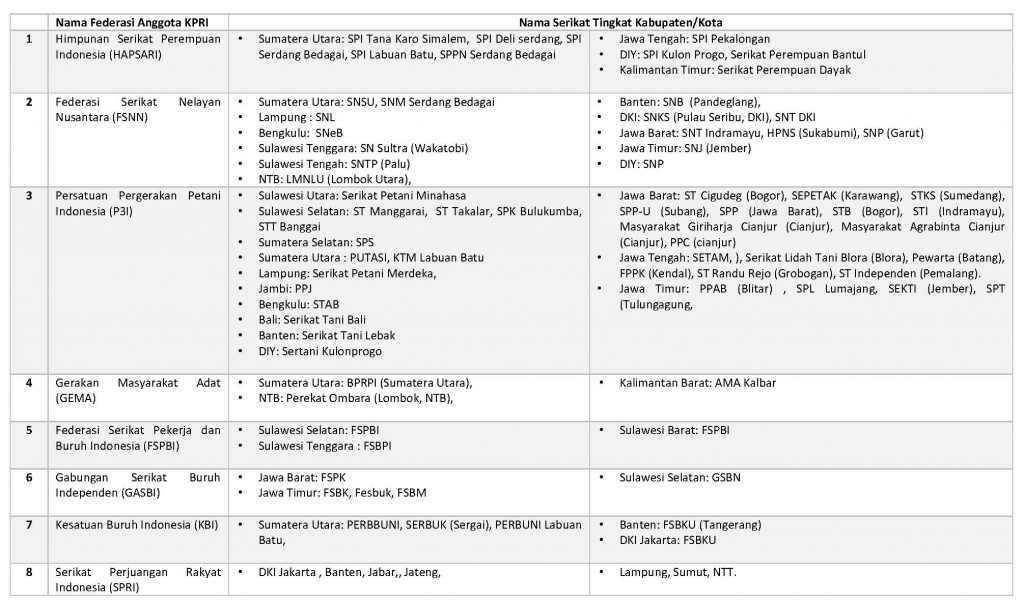
KPRI brings together various federations and people's organizations across Indonesia.
Konfederasi Pergerakan Rakyat Indonesia (KPRI; Confederation of Indonesia People Movement)
2016-2020 Period